Relevant issues of the tire and rubber industry development
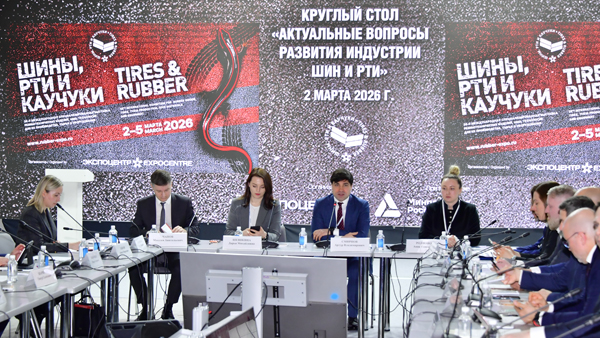
Tires & Rubber 2026 hosted the Panel on the Relevant Issues of the Tire and Rubber Industry Development. Its key topic was the complex transformation of the industry from overcoming raw material and technological dependence to building a new quality system and promotion to foreign markets. The participants discussed the entire product lifecycle, focusing on such challenges as a high share of imports, the shortage of personnel, and the imperfection of the regulatory framework. The main keynote of the meeting was the government support, which will become as targeted and digital as possible in 2026, but its effectiveness will now directly depend on the initiative of manufacturers themselves and their willingness to participate in the development of modern standards and use preferential business scaling tools.
Opening the meeting, Artur Smirnov, Director of the Chemical Industry Department at the Russian Ministry of Industry and Trade, stressed that government support amounted to more than 6.1 billion rubles in 2025. The ministry is currently focusing on the creation of Russian-based production facilities for key raw materials, as well as the implementation of large-scale investment projects, such as the production of large-sized tires in Omsk with a capacity of 10.5 thousand units per year. The most important technological breakthrough will be the launch of an aircraft tire test stand, which will simplify the introduction of new models of domestic aircraft to the market. At the same time, the ministry is actively addressing the personnel issue through pilot regional projects, building a direct link between factories and practical activities in colleges so that graduates of universities and colleges come to enterprises already prepared to work using real equipment.
Elena Kostyleva, Director of the Department of Standardization of Materials and Technologies at the Institute of Standardization, continued the topic of protecting the Russian market, pointing out a paradoxical situation: quality control of many products in 2026 is still based on the standards of the 70s, which makes the market vulnerable to imports of questionable quality. After a large-scale reorganization of the technical committee of TC 160, the institute started developing a promising standardization programme until 2031, which will not only update control methods, but also use the standards of the organization as a full-fledged tool in public procurement and in obtaining state support measures. The expertise of the standards of the organization within the technical committee takes the internal documents of enterprises to a new level, making them virtually equal to national standards and helping domestic manufacturers compete in quality and safety.
In his turn, Maksim Chapov, Director of Export Support for Construction Materials, Textile Industry and Consumer Goods at the Russian Export Center, presented a wide range of financial and non-financial instruments to support non-primary non-energy exports. He drew attention to the start of a competition for exporters to provide state support for the transportation of industrial goods. He also announced a bonus programme for companies that have passed the voluntary "Made in Russia" certification. The representative of the REC paid special attention to the processing procedure in the customs territory, which allows the import of imported raw materials without paying customs duties and taxes, subject to subsequent export of finished products to countries outside the EAEU, which significantly increases the competitiveness of Russian tires and rubber product abroad.
The meeting resulted in a call for businesses to become more actively involved in the work of technical committees and use the available digital services of the My Export platform in order to synchronize the pace of production modernization with government development plans.
Press Service, EXPOCENTRE AO